The Elway Effect: How One Man's Football DNA Became the Blueprint for Every Broncos Decision
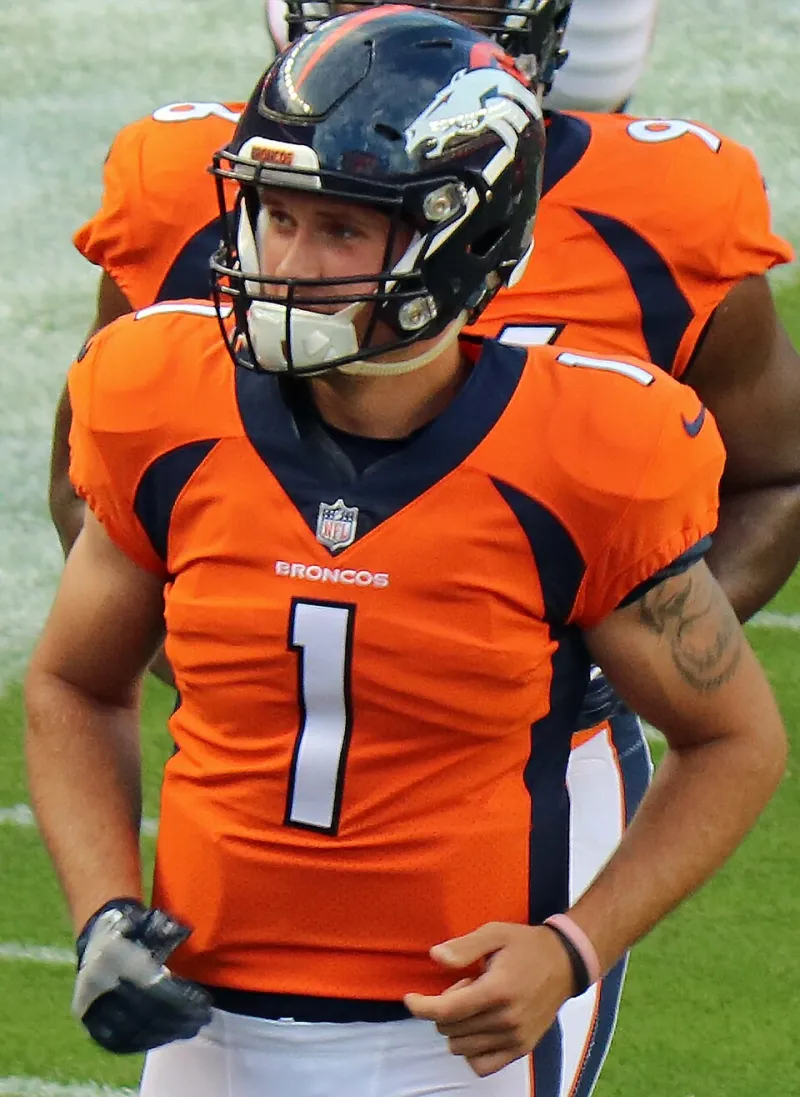
Photo: Jeffrey Beall, CC BY 4.0, via Wikimedia Commons
There's a reason Broncos Nation doesn't just root for a team — it roots for a tradition. Walk into Empower Field at Mile High on any given Sunday and you'll feel something that goes beyond jersey sales and tailgate smoke. There's a standard in the air. An expectation. And whether fans consciously realize it or not, a huge chunk of that standard traces directly back to one man: John Elway.
From his iconic playing days to his years steering the front office, Elway has shaped Denver's football identity more profoundly than perhaps any single figure in any other NFL city. This isn't just nostalgia talking — it's organizational reality. Let's dig into how that legacy actually works, what it's meant for the quarterback position specifically, and what it signals about Denver's future.
Two Retirements, One Unbroken Influence
Elway hung up his cleats after Super Bowl XXXIII in January 1999, but he never really left the building — at least not in spirit. The franchise spent the next decade chasing the ghost of his greatness, cycling through quarterbacks who ranged from serviceable to spectacular (hello, Peyton Manning) but rarely finding anyone who embodied that same combination of toughness, improvisation, and clutch-gene that defined Number 7.
When Elway returned as Executive Vice President of Football Operations in 2011, it wasn't just a front-office hire. It was a philosophical reset. He came back with a clear vision: Denver would compete for championships, and the quarterback position would never be an afterthought. That first offseason, he orchestrated the signing of Peyton Manning — a move that shocked the league and immediately validated his authority. The Broncos went to two Super Bowls in four years. The template was set.
The QB-First Philosophy in Practice
What makes the Elway approach distinct isn't just that he prioritizes quarterbacks — every team does that, at least in theory. What's different is how he evaluates them. As a former signal-caller who played in a pre-analytics era but thrived on instinct and adaptability, Elway has consistently favored quarterbacks with elite athleticism, strong arms, and the mental makeup to handle a big market.
Look at the draft picks under his watch. The Tim Tebow era was already in motion when he arrived, but Elway quickly moved on from that experiment. He targeted Brock Osweiler as a developmental arm, brought in Trevor Siemian as a bridge option, and eventually swung big on Paxton Lynch in the first round — a pick that didn't pan out but reflected his preference for raw, high-ceiling prospects over polished game managers.
The bigger swings — trading up for Russell Wilson, for instance — show a front office willing to take calculated risks to land a franchise cornerstone. Not every bet has paid off, but the philosophy has remained consistent: you don't win in Denver by settling at quarterback.
Culture Starts at the Top
Beyond the draft board, Elway's influence on organizational culture is just as significant. Players who've come through Denver frequently talk about the standard expected in that locker room. There's an accountability culture that stems from watching how Elway himself carried the franchise during difficult seasons in the late '80s and '90s — when the offensive line was shaky, the supporting cast thin, and the only constant was Number 7 willing his team down the field.
Coaches hired under Elway's tenure have generally shared a few traits: defensive-minded thinking, an appreciation for the running game as a foundation, and a willingness to build around whatever quarterback is under center rather than forcing a rigid system. It's a player-empowerment approach that reflects Elway's own experience wanting the freedom to make plays.
Broncos Nation has felt this culture in real, tangible ways. The 2015 Super Bowl run — built on a historically dominant defense and Manning's veteran savvy — was quintessentially Elway-era football: smart, physical, and built to peak in January.
What the Next Chapter Looks Like
Here's where it gets interesting for fans paying close attention. The Broncos are, once again, in that familiar territory of figuring out who their next long-term answer at quarterback is. And the lessons of the Elway era are more relevant than ever.
The front office has shown it won't rush the process just to quiet critics — but it also won't be patient to the point of stagnation. The balance between developing a young arm and remaining competitive enough to keep the fan base engaged is a tightrope Elway himself walked as a GM, and whoever holds that executive role going forward will be navigating with his map.
For the Broncos faithful, the comfort is in knowing that the franchise has a clear identity. It knows what a great quarterback looks like. It knows what winning culture feels like. And it has the organizational memory — built over decades of Elway's influence — to recognize when it's found the right guy.
Mile High Pride Is Built on More Than Wins
What makes the Elway legacy so sticky in Denver isn't just the championships, though those help. It's the standard he set for how the game should be played and how a franchise should be run. Broncos fans didn't just watch a great player — they watched a great football mind at work, and then watched that same mind reshape the team from the front office.
Every time the offense lines up under center at Empower Field, every time a draft pick is announced, every time a free agent signs that dotted line — there's a little bit of Elway in that decision. And for a fan base that's bled orange and blue through thick and thin, that continuity is exactly what Mile High Pride is built on.
The dynasty isn't just about trophies. It's about the relentless belief that Denver can always compete — and that belief has Elway's name written all over it.