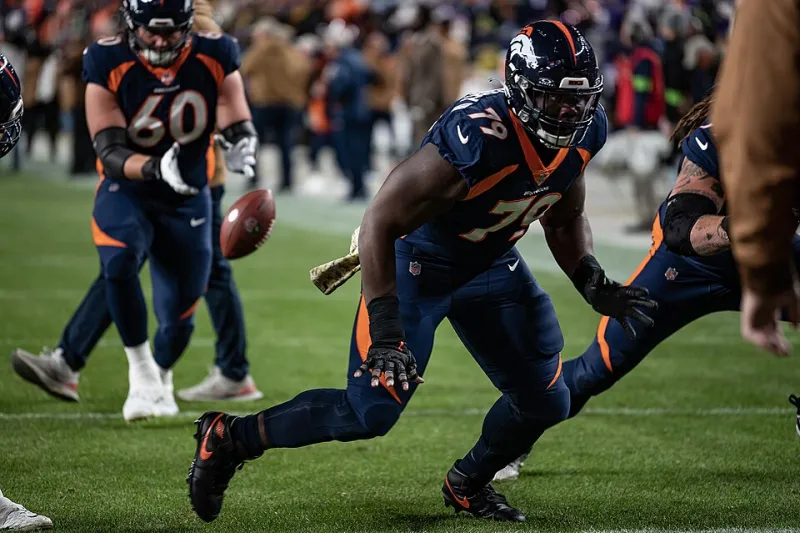
Signed, Sealed, Demolished: The Free Agent Blunders That Cost Denver More Than Just Cap Space
Photo: Lanolting, CC BY-SA 4.0, via Wikimedia Commons
There's a particular kind of pain that every Broncos fan knows. It's not the gut-punch of a playoff loss or the slow burn of a bad draft pick. It's the specific agony of watching a blockbuster free agent signing — the kind that made you pound the table and text your buddy at midnight — slowly unravel into a financial disaster that handcuffs the franchise for half a decade.
Denver has had its share of those moments. Big names. Bigger contracts. And some of the most expensive lessons in modern NFL history.
When the Ink Dries and the Doubts Start
Free agency in the NFL is a seductive beast. Every March, front offices across the league convince themselves that one transformative signing can flip the script. For Denver, that temptation has been especially hard to resist — particularly during eras when the roster felt just a piece or two away from something special.
The problem is that "just a piece away" thinking tends to produce decisions made with emotion rather than cold-eyed roster construction logic. And when you're handing out nine-figure guarantees based on what a player used to be rather than what he's about to become, the math rarely works in your favor.
The Paxton Lynch Problem (and Why It Wasn't Just About Lynch)
Okay, Lynch was technically a draft pick, not a free agent — but his story represents a broader organizational pattern worth naming: Denver repeatedly paid premium prices for quarterbacks who couldn't deliver. That habit didn't stop at the draft. The franchise has spent years chasing the ghost of John Elway's arm, and that chase has cost real money in the open market too.
But the truly instructive disasters came in the trenches and at skill positions, where Denver opened the vault and got very little in return.
Aqib Talib Was Worth It — Until He Wasn't
Let's be fair here. Some signings worked, at least for a while. Aqib Talib arriving in Denver in 2013 was a legitimate game-changer. He was a cornerstone of the "No Fly Zone" secondary that helped deliver Super Bowl 50. Nobody's arguing that one was a mistake.
But the Broncos' habit of extending and re-upping players on the back nine of their careers — locking in cap dollars against future production that simply wasn't coming — is where the real damage accumulated. Denver's front office, particularly in the post-Super Bowl years, struggled to identify when a player had given his best football to the franchise versus when he still had something left in the tank.
The Peyton Manning Aftermath Nobody Talks About
Here's the uncomfortable truth that gets glossed over in the warm glow of Super Bowl 50 nostalgia: the financial and roster consequences of the Manning era lingered long after he rode off into retirement. Denver spent aggressively to build around him — justifiably so, given the results — but the cap casualties, the veteran-heavy roster, and the lack of developmental depth caught up with the franchise almost immediately.
When Manning left, Denver didn't just lose a quarterback. They lost the architecture that made everything work, and the salary commitments made during that window left the new regime working with one hand tied behind its back.
Reciever Money and Diminishing Returns
Wide receiver contracts have been a recurring sore spot. Denver has handed out significant money to pass-catchers who looked like ideal fits for a high-powered offense, only to watch injuries, scheme changes, or simple age-related decline turn those investments into dead cap weight.
The frustrating part isn't just the money — it's the opportunity cost. Every dollar tied up in an underperforming veteran is a dollar that can't go toward a hungry young player who might actually move the needle. Cap space is a zero-sum game, and Denver has repeatedly found itself on the wrong side of that equation.
What the Pattern Actually Tells Us
Look at Denver's most painful free agent whiffs and a few themes emerge pretty consistently:
Age miscalculation. The Broncos have repeatedly signed players who were elite two or three years prior, betting that there was still a high level left in them. Sometimes there was. Often there wasn't.
Positional premium bias. Denver has tended to overpay at glamour positions — quarterback, wide receiver, pass rusher — while underinvesting in the offensive line and secondary depth that actually sustain winning football over a full season.
Window-chasing desperation. When you believe you're one move away, you take risks you otherwise wouldn't. That's human nature. But in the NFL, those risks come with guaranteed money attached, and the hangover outlasts the optimism by years.
The Sean Payton Era and a New Approach
To be fair, there are genuine signs that the current regime understands these historical pitfalls. The approach under Sean Payton has been more surgical — targeting players who fit specific scheme needs rather than chasing names. That's not a guarantee of success, but it does suggest the organization has done some honest self-reflection about why the checkbook approach has failed.
The Bo Nix era is still being written, and the supporting cast being assembled around him will determine whether Denver has finally learned to build sustainably rather than sprint toward a window that keeps slamming shut.
The Lesson Broncos Nation Keeps Paying For
Every fanbase has its version of this story. But Denver's version stings a little extra because the Broncos have been close enough to taste it — close enough that the aggressive moves always seemed justified in the moment.
That's the real curse of the contract. It's not that the front office was reckless or incompetent. It's that they were almost right, over and over again, and almost right in the NFL means you're paying for mistakes while your rivals are cashing championship checks.
Broncos Nation deserves better roster construction. And honestly? Based on some recent moves, we might finally be getting it. But we've earned the right to be skeptical — because we've seen this movie before, and we know how the credits roll.