Gut-Punch Football: Ranking the Playoff Losses That Broke Broncos Nation's Heart and What We Did With the Pieces
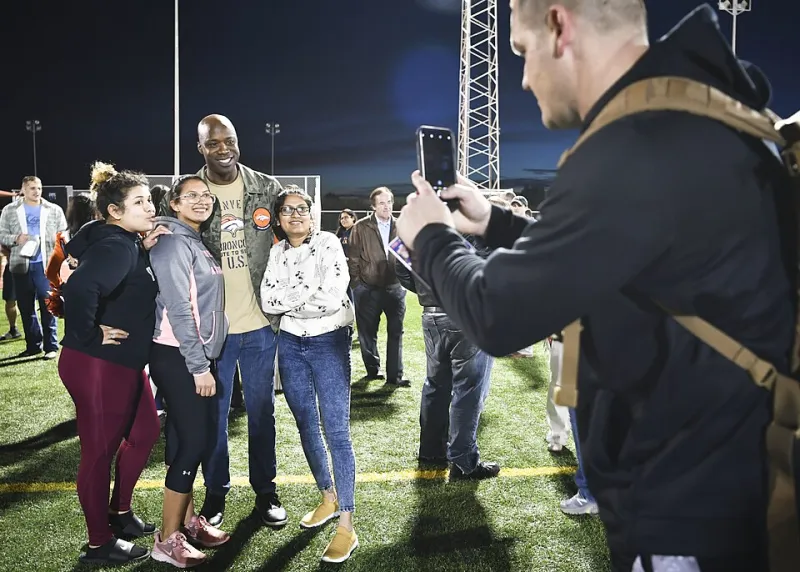
Photo: U.S. Navy photo by Petty Officer 2nd Class Eduardo T Otero, Public domain, via Wikimedia Commons
If you've been a Broncos fan for any significant stretch of time, you've developed a very specific skill set. You know how to get your hopes up responsibly. You've mastered the art of cautious optimism. And somewhere along the way, you've learned to absorb a gut-punch loss, sit with the pain for a few days, and then come back ready to do it all over again.
This is the Broncos fan experience in a nutshell: incredible highs, crushing lows, and an almost stubborn refusal to stop caring.
We're not here to wallow — well, maybe a little — but there's genuine value in looking back at the postseason losses that shaped this franchise and its fan base. Because every one of those painful exits taught us something, even when the lesson was delivered in the most brutal way possible.
Super Bowl XLVIII: The One We Don't Talk About (But Can't Stop Thinking About)
Let's rip the bandage off and start with the worst one. February 2, 2014. MetLife Stadium. The Seattle Seahawks dismantled Peyton Manning's record-setting offense so completely and so efficiently that it almost felt personal.
43-8. That's not a football score. That's a message.
What made Super Bowl XLVIII uniquely devastating wasn't just the scoreboard — it was the expectations. That 2013 Broncos offense had rewritten the NFL record books. Manning had thrown 55 touchdown passes. The entire season felt like destiny unfolding in real time. Denver fans didn't just think they were going to win that Super Bowl; they thought they were about to witness something historic.
They were right about the historic part. Just not in the way anyone wanted.
The fallout from that game lingered for years. It accelerated the conversation about whether Manning could hold up physically, it exposed defensive vulnerabilities that the front office scrambled to address, and it planted a seed of doubt in the fan base that took two more seasons and a championship to fully uproot. That loss didn't just hurt — it fundamentally changed the calculus of what the Peyton Manning era could realistically accomplish.
The Drive. The Fumble. The Heartbreak That Never Fully Heals.
Okay, technically these are regular season and playoff-adjacent moments rather than pure postseason exits, but any honest accounting of Broncos fan trauma has to acknowledge the Cleveland games from the mid-to-late 1980s. The 1986 AFC Championship against the Browns at Municipal Stadium remains one of the most emotionally complex games in franchise history — a win built on John Elway's legendary 98-yard drive that somehow still carries a tinge of sadness because of what came after.
And what came after was Super Bowl XXI, where the New York Giants handed Denver a 39-20 loss that stung particularly hard because the Broncos had genuinely believed — and had reason to believe — they were ready to win it all.
Those late-80s near-misses established a pattern that would define Broncos fan psychology for a generation: the belief that getting close is somehow worse than not getting there at all. Denver fans learned early that proximity to greatness without achieving it is its own particular kind of suffering.
The Modern Era Exits and What They Cost
Post-Super Bowl 50, the Broncos' playoff story has been defined more by absence than heartbreak. Missing the postseason entirely carries its own dull ache — not the sharp pain of a close loss, but the chronic discomfort of irrelevance. For a fan base conditioned to competing for championships, watching other teams play meaningful January football while Denver sits at home is a different kind of difficult.
The 2023 and 2024 seasons brought some cautious optimism with new coaching and roster investment, but the playoff drought has stretched long enough that simply making the postseason again would feel like a victory for large portions of the fan base. That's a significant psychological shift from the days when anything short of a Super Bowl appearance felt like failure.
This recalibration of expectations is both healthy and slightly heartbreaking, depending on how long you've been watching.
What These Losses Actually Taught Us
Here's the thing about playoff heartbreak that doesn't get acknowledged enough: it builds something. Not in a clichéd, motivational-poster kind of way, but in a very real, community-level sense.
Every devastating loss creates a shared reference point for Broncos Nation. When you meet another Denver fan and the conversation turns to football, you don't need to explain the weight of certain moments — they already know. That shared grief is, paradoxically, a form of connection. It's the thing that makes Broncos fan culture feel like an actual community rather than just a collection of people who like the same team.
The losses also force honest conversations about roster construction, coaching philosophy, and front office decision-making that wouldn't happen if Denver just cruised to championships every few years. The pain sharpens the analysis. It's why Broncos fans tend to be genuinely knowledgeable about the game — because they've had plenty of painful moments that demanded explanation.
Why We Keep Showing Up
Somebody who doesn't follow football might reasonably ask: why do you keep doing this to yourself? Why invest so much emotional energy in something that delivers this much pain?
The answer is pretty simple. The highs — Super Bowl XXXII, Super Bowl XXXIII, Super Bowl 50 — are real. They happened. The feeling of watching John Elway finally get his championship, or watching Von Miller dismantle Cam Newton, or watching Terrell Davis run through an entire defense — those moments are worth every gut-punch loss that came before or after them.
Broncos Nation keeps faith not despite the scars but because of what earned them. Every painful playoff exit is proof that we cared enough to hurt. And in a world where it's easy to stay detached, there's something genuinely valuable about caring that much about something.
So yeah, bring on the next season. Bring on the hope and the heartbreak and the group chats and the second-guessing. We're Broncos fans. We've been through worse, and we came back every single time.
Mile High Pride. Every game day. No exceptions.