Home Is Where the Hurt Is: How Mile High Became Denver's Biggest Road Block
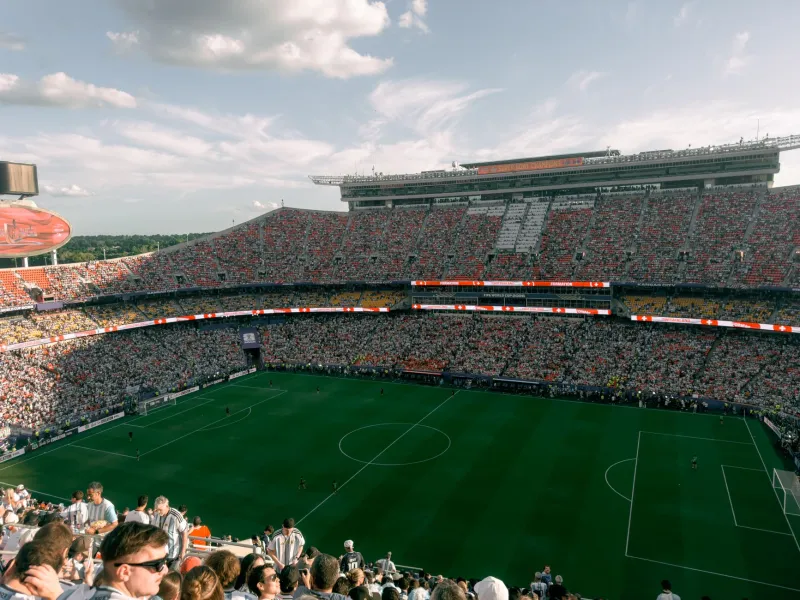
There used to be a time when visiting teams would step off the plane in Denver and already look half-beaten. The altitude, the crowd noise, the orange-and-blue wall of noise that rattled opposing offensive lines before the first snap — Mile High was genuinely one of the most intimidating venues in the NFL. Quarterbacks visibly struggled. Coaches game-planned around the thin air. The home-field advantage wasn't just real; it was a legitimate strategic asset.
So what happened?
Since the Broncos hoisted the Lombardi Trophy after Super Bowl 50, Empower Field at Mile High has quietly transformed from a fortress into something closer to a very expensive liability. The wins have dried up at home. The mystique has faded. And Broncos Nation — patient, passionate, perpetually hopeful — has been left wondering why their team seems to shrink under the stadium lights that are supposed to make them grow.
The Numbers Don't Sugarcoat It
Let's get the uncomfortable part out of the way first. From 2016 through the 2024 season, Denver's home record has been, to put it charitably, underwhelming. The Broncos have consistently posted better road records than home records across multiple coaching regimes and roster configurations. That's not a fluke. That's not bad luck. That's a pattern.
In several of those seasons, Denver actually won more games away from home than in front of their own fans — a statistical inversion that should not be possible for a franchise playing in one of the most geographically unique environments in professional football. The altitude alone should tilt the scales. It doesn't seem to anymore.
Opponent preparation has advanced dramatically. Every NFL team now spends weeks before a Denver road trip practicing at elevation-simulating facilities, using oxygen-restriction training methods, and arriving in Colorado days earlier than they used to. The edge that geography once provided has been systematically engineered away by the rest of the league. Mile High's natural advantage has essentially been neutralized by modern sports science, and nobody replaced it with anything else.
The Crowd Factor: Friend or Phantom?
Broncos fans show up. That's never been the issue. Empower Field sells out. The tailgates are legendary. The energy in that parking lot before kickoff is genuinely one of the best atmospheres in American sports. But somewhere between the lot and the fourth quarter, something gets lost.
Fan theories about this are everywhere in Broncos Nation forums and comment sections. One popular camp argues that the crowd has become too conditioned to disappointment — that years of watching a rebuilding roster struggle has turned the home crowd from a weapon into a passive observer. There's something to that. Crowd noise is reactive. When a team plays flat, the crowd goes quiet. When the crowd goes quiet, the opposing offense relaxes. It becomes a feedback loop that's very hard to break mid-game.
Another theory, less charitable but worth examining, is that the demographic shift in stadium attendance has changed the energy. Ticket prices have climbed steeply since 2015, and some longtime season ticket holders — the folks who knew every third-down chant and could rattle the upper deck on command — have been priced out or simply aged out. What fills those seats now is often a more casual, corporate-leaning crowd that's great for pregame Instagram content but doesn't quite bring the same relentless pressure that made the old Mile High genuinely terrifying for visiting teams.
Coaching Carousels and Comfort Zones
Denver has cycled through head coaches with alarming frequency since Gary Kubiak stepped down after the 2016 season. Vance Joseph, Vic Fangio, Nathaniel Hackett, Sean Payton — each brought a different offensive philosophy, a different defensive identity, and a different relationship with the home crowd.
Here's an underappreciated wrinkle: road games, paradoxically, can simplify a team's mental approach. You're in enemy territory. The crowd is against you. The only thing that matters is executing. Some teams, and some rosters, actually respond better to that siege mentality than they do to the pressure of performing for their own fans in a stadium where expectations are high and patience runs thin.
Multiple former Broncos players have quietly mentioned in interviews over the years that the pressure of playing at home — knowing that a loss in front of 76,000 of your own fans is going to dominate the local sports talk cycle for a week — can create a tightness that road games don't produce. That's a psychology problem, not a talent problem. And it's one that coaching staffs have struggled to solve.
Is the Altitude Myth Officially Dead?
Not entirely, but it's on life support. The elevation at Empower Field — roughly 5,280 feet above sea level — still matters in the fourth quarter of physically demanding games. Conditioning differences still show up late. But the gap has narrowed considerably as NFL teams invest more resources in altitude preparation than ever before.
What was once a decisive advantage is now more of a marginal one, and marginal advantages don't overcome poor offensive line play, quarterback inconsistency, or special teams breakdowns — all of which have plagued Denver at various points during their home struggles.
The league has also gotten faster at sharing information. Defensive coordinators now have detailed analytics on exactly how altitude affects their players' performance metrics, and they adjust substitution patterns accordingly. The mystique worked partly because it was mysterious. Now it's been quantified, and quantified things lose their psychological power.
What Fixes This?
The honest answer is that there's no single lever to pull. Winning fixes it, eventually. A quarterback who plays with enough swagger to energize the crowd on the first drive fixes it. A defense that creates early turnovers and gives the home crowd something to genuinely scream about fixes it.
Sean Payton's offense has shown flashes of the explosiveness that could reignite Empower Field on its best days. When Denver moves the ball quickly and scores early, the stadium does come alive. The bones are still there. The crowd still wants to be part of something electric.
But Broncos Nation deserves honesty more than it deserves comfort. The home-field advantage that once felt like a birthright has to be rebuilt, not assumed. It won't come back because the stadium is there or because the fans show up — it'll come back when the team on the field gives those fans a reason to make visiting teams feel like they landed on a different planet.
Until then, Mile High remains one of the NFL's great venues with one of the NFL's most devoted fan bases — watching their team inexplicably play better everywhere else. And that, more than any losing record, is the real gut punch.