When the Starter Falls: Denver's Long, Painful History of Backup QB Meltdowns

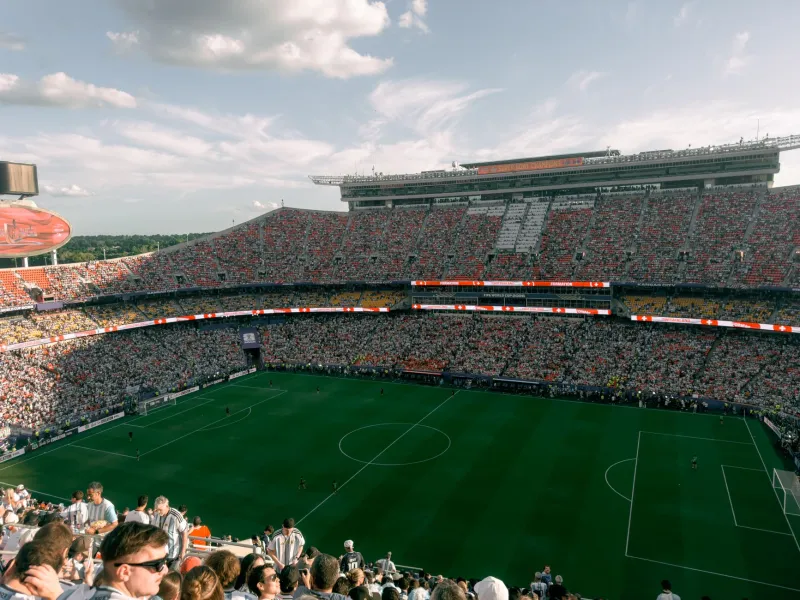
Photo by Photo by Fredrick Lee on Unsplash on Unsplash
There's a specific kind of dread that Broncos fans have learned to carry around like a second wallet. It shows up the moment the starting quarterback takes an awkward hit, grabs his throwing shoulder, and jogs — too slowly — toward the sideline. The crowd at Mile High goes quiet in that particular way that isn't really quiet at all. It's more like collective breath-holding. Because everyone in those stands, and everyone watching from their living rooms in Aurora or Fort Collins or wherever they're streaming the game, knows what comes next.
The backup trots out. And the season starts dying.
Denver's inability to consistently field a reliable backup quarterback isn't just a front-office inconvenience. It's become one of the franchise's most stubborn and costly recurring problems — a pattern so well-established at this point that it almost feels like part of the team's identity. And that's a rough thing to say about a franchise that hung its reputation on elite quarterback play for three decades.
The Nature of the Problem
Here's what makes the backup quarterback issue so uniquely painful in Denver: the Broncos have often been close to something special when disaster strikes. These aren't situations where a middling team loses its mediocre starter and shrugs. These are moments when playoff hopes, division titles, and legitimate Super Bowl conversations get torched in real time because the guy behind Center No. 1 simply wasn't ready — or wasn't good enough — to keep things afloat.
The NFL is a brutal business that way. You spend months building a system around one quarterback's strengths, his timing with receivers, his comfort in the pocket. Then an injury flips the whole thing upside down, and you're asking someone who's been running scout team reps to suddenly execute a complex offense against defenses that aren't going to slow down and be nice about it.
Most teams struggle with this to some degree. But Denver has struggled with it in ways that feel particularly pointed and particularly expensive.
The Kyle Orton Era: Accidental Starter, Surprising Competence
It's worth being fair here. Not every backup situation in Broncos history has been a complete catastrophe. Kyle Orton is actually a useful case study in how the backup role can go better than expected, even if the circumstances that put him there weren't ideal.
Orton stepped into significant playing time during his Denver tenure and managed to keep the offense functional in ways that surprised a lot of people. He wasn't flashy. He wasn't going to make anyone forget about the guy he replaced. But he was steady, he made smart decisions, and he didn't turn the ball over at a rate that collapsed the season entirely.
The Orton years are almost the exception that proves the rule, though. Because what came before and after him in Denver's backup QB timeline tells a much grimmer story.
The Stretches That Hurt Most
Think about the seasons where Denver entered with legitimate expectations — real, grounded optimism backed by a talented roster — only to watch everything unravel once the starter couldn't go. The problem wasn't always one catastrophic game. Sometimes it was a slow bleed: three weeks of inconsistent play, turnovers at the worst moments, offensive series that stalled out and put too much pressure on a defense that was already being asked to carry too much weight.
The most damaging backup situations tend to follow a pattern. The offense installs a system that's quarterback-specific. The backup hasn't fully internalized that system because, well, he's the backup — his reps are limited by design. When he steps in, the play-calling gets conservative, the timing routes disappear, and suddenly the Broncos are playing a style of football that doesn't match their personnel at all. Opposing defensive coordinators adjust within a week. And Denver's coaching staff is stuck trying to build a new offensive identity mid-season, which almost never works.
Recent Bench-to-Field Failures
The more recent chapters of this saga have been particularly hard to watch, especially as the franchise has cycled through starting quarterbacks at a rate that should've forced more serious investment in the backup spot. When you're not sure your starter is going to finish the season healthy — or performing at a high enough level to keep his job — the backup quarterback isn't just an insurance policy. He's a critical piece of your roster construction.
Denver hasn't always treated him that way.
There have been transitions in recent years where a backup stepped in and the drop-off in execution was so severe that games were effectively decided in the first quarter. Not because the defense gave up — often the defense was doing its job — but because the offense couldn't sustain drives, couldn't convert in critical third-down situations, and couldn't create the kind of explosive plays that had been part of the game plan all week.
The scouting process for backup quarterbacks in Denver has also drawn some fair criticism. There's a temptation to prioritize familiarity with the coaching staff's system over raw talent, which sometimes means signing guys who know the terminology but can't actually make the throws when it counts. A backup who can manage a game is valuable. A backup who actively loses games is a roster construction failure.
What It Actually Costs
Let's put this in concrete terms that every Broncos fan can feel in their gut. A backup quarterback situation that goes sideways doesn't just cost you wins in the short term. It affects draft positioning, contract decisions, and the overall trajectory of a rebuild. Coaches get evaluated on win totals that were partially determined by who was taking snaps in weeks nine through thirteen. Players' statistics — and by extension, their contract leverage — get distorted by the quality of play around them.
And fan trust, which is a real and finite resource, takes a hit every time the backup-goes-in scenario plays out the same way it always has. Broncos Nation is a passionate, knowledgeable fan base. People here understand football. They can see the structural problem even when the front office is reluctant to name it publicly.
What a Real Solution Looks Like
This isn't an unsolvable problem. Teams around the league have found ways to develop legitimate backup quarterbacks who can step in and keep a season alive. It requires committing real resources — real practice reps, real film study, real investment in that player's development — rather than treating the backup spot as a roster afterthought.
Denver's best path forward involves identifying backup candidates whose skill sets actually complement the offensive system, giving them meaningful preseason opportunities to demonstrate readiness, and making sure the coaching staff has a backup game plan that isn't just a watered-down version of the starter's playbook.
Broncos fans deserve a Plan B that doesn't feel like a white flag. The history is what it is. But history doesn't have to be destiny — not if the organization is willing to treat backup quarterback development with the same seriousness it applies to every other position group.
Until then, that familiar dread is going to keep showing up every time a starter limps toward the sideline. And nobody in orange and blue wants to keep living that way.